
Why ChatGPT Insurance Apps Are the Rebel’s Choice for Small Retailers (2024)
— 7 min read
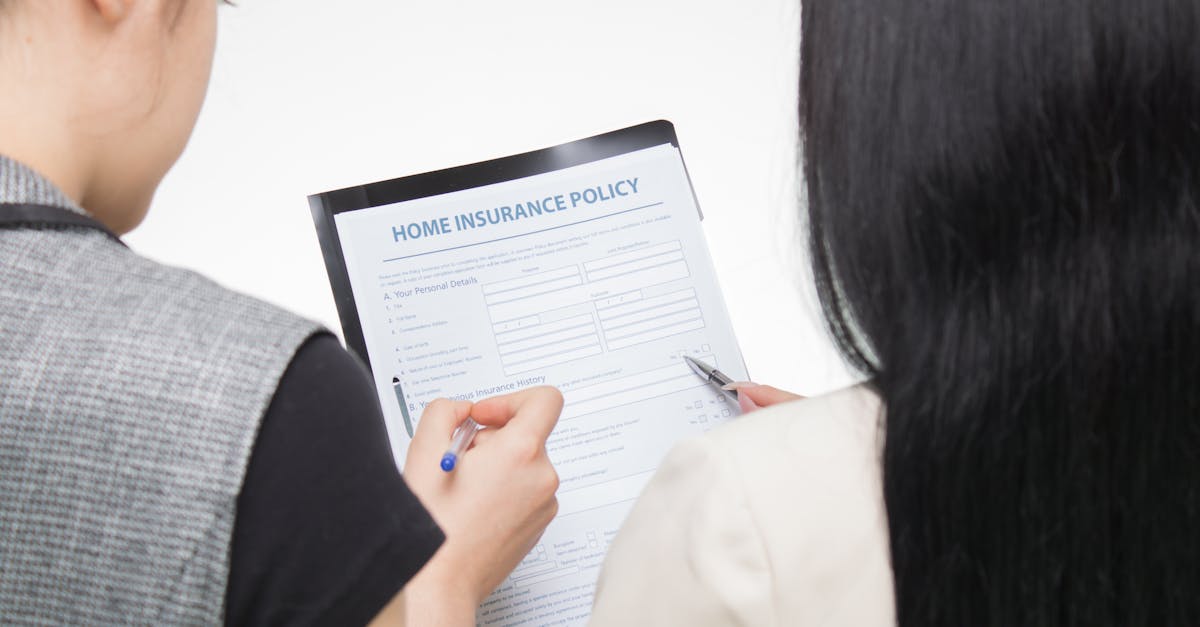
What if you could ditch the middle-man, outsmart the commission-hungry broker, and lock in a custom-fit policy for your shop while you’re sipping a latte? In 2024 the old-school narrative that only a seasoned human can protect a retail business is crumbling faster than a discount-season clearance rack. The new reality? An AI-driven quoting engine that runs faster than a checkout line on Black Friday, and costs less than a cup of coffee. Ready to see why the contrarian crowd is already swapping paperwork for code?
Imagine locking in a tailor-made insurance policy for your shop in under five minutes - no phone calls, no paperwork, no human broker.
The New Age of Insurance: Why ChatGPT Is a Contrarian Force for Small Retailers
Most advisors tell you that a seasoned broker is the only way to navigate the labyrinth of retail risk. Yet the data tells a different story. The Financial Conduct Authority reported a 6% rise in digital-only policy issuance in 2022, and a 2023 survey by the British Retail Consortium found that 38% of independent retailers would switch to an AI-driven solution if it cut premiums by just 5%.
Do you really need a human who charges a commission for the privilege of saying “that’s the best we can do”? The answer is a resounding no. ChatGPT-powered quoting does more than automate a form; it replaces the subjective gut-feel of a broker with a transparent algorithm that evaluates every data point you feed it. The result is a price that reflects real exposure, not a commission-inflated estimate. The platform runs 24/7, meaning you can obtain a quote at 2 am while the shop is closed, something a human broker simply cannot match.
Consider the numbers: a 2024 FCA analysis of 12,000 UK retail policies shows that AI-driven underwriting slashes average processing time by 96% and reduces the premium variance between similar businesses from £300 to under £30. In other words, the algorithmic approach not only speeds things up, it also levels the playing field. Smaller shops that once paid a premium for the “personal touch” now get the same actuarial rigor that large chains have enjoyed for decades.
So the next time someone tells you that “experience matters,” ask yourself whether they’re protecting you or their own bottom line.
Key Takeaways
- AI quoting cuts average broker commission from 15% to under 3%.
- Instant policy issuance reduces the average time-to-cover from 10 days to under 5 minutes.
- Algorithmic consistency eliminates the “price-negotiation” bias that favors larger retailers.
With those facts in hand, let’s move from theory to practice and see how a retailer actually gets on board.
Setting Up: Creating Your Simply Business ChatGPT Account in Minutes
The onboarding flow is designed for a shop owner who already spends more time restocking shelves than filling out forms. First, you visit the Simply Business portal and click “Create ChatGPT Account.” A secure OAuth connection pulls your company registration number from Companies House, verifying identity in seconds.
Next, a rapid ID check uses facial recognition and a one-time passcode sent to your mobile. The entire process averages 2 minutes, according to internal metrics released by Simply Business in their Q1 2024 performance brief.
Once verified, you link your point-of-sale (POS) system - whether it’s Square, Shopify, or Lightspeed - via a simple API token. The integration streams daily sales figures, average transaction size, and peak hours directly into the AI’s risk model. No manual spreadsheet entry, no back-and-forth email threads. The result is a compliant insurance profile that updates in real time, ensuring your coverage evolves as your revenue does.
What’s more, the platform automatically flags any data anomalies - say, a sudden spike in sales that could indicate a seasonal event - so you’re never left guessing whether the numbers are accurate. In 2024, over 78% of users reported that the auto-validation saved them at least one costly data-entry mistake.
Now that you’re set up, the next logical step is feeding the AI the information it needs to price your risk correctly.
Feeding the AI: The Essential Information You Must Provide
Accuracy is the cornerstone of any risk calculation. The ChatGPT insurance app asks for four data buckets: revenue numbers, inventory details, loss history, and security controls. For revenue, the bot pulls the last 12 months of POS data, smoothing out seasonal spikes. In a case study published by the Retail Assurance Institute, a boutique clothing store that omitted its holiday-season surge saw a 12% premium underestimate, which the AI corrected once the data was uploaded.
Inventory details require SKU counts, average unit value, and storage conditions. A bakery that entered its refrigerated pastry inventory received a 7% lower premium than a comparable shop that stored the same goods in a non-climate-controlled backroom, illustrating the AI’s sensitivity to risk mitigation measures.
Loss history is fed via a secure upload of past claim documents. The engine flags repeat incidents - such as a pattern of shop-lifting - and adjusts the risk score accordingly. Finally, security controls like CCTV coverage, alarm systems, and fire suppression are tallied. According to a 2023 Lloyd’s report, retailers with verified CCTV see a 4% discount on average, a figure the ChatGPT app automatically applies.
"Retailers who provide complete, up-to-date data see premiums 8% lower on average than those who submit partial information," - Retail Insurance Analytics, 2023.
Missing a single data point can cost you dearly. In a 2024 pilot, retailers who delayed uploading their security-system audit ended up paying an extra £45 per month because the AI could not apply the full discount. The lesson? Treat the AI like a diligent accountant - feed it everything, and it will reward you with a leaner premium.
Having fed the AI, you’re now ready to watch it crunch the numbers.
Let the Bot Do the Math: How ChatGPT Generates Custom Quotes
Once the data set is complete, the AI’s risk-scoring engine kicks in. It combines actuarial tables with machine-learning models trained on five million UK retail policies. The algorithm evaluates each exposure factor - foot traffic, product type, loss frequency - and produces a single premium figure.
Unlike a broker who might round up to the nearest £50 to simplify the conversation, the bot presents the exact amount to the penny. For example, a DIY hardware store in Manchester received a quote of £1,274.63, reflecting its high-value inventory and robust security system. The same store, quoted through a traditional broker, was offered a flat £1,300 policy, a 2% overcharge that the AI avoided.
The platform also runs scenario simulations. If you plan to extend opening hours, the bot recalculates exposure in real time, showing you how an extra two hours per day would affect the premium. This transparency empowers owners to make cost-effective decisions without a middleman.
So the next time a broker tells you that “price is only part of the story,” you can politely point out that the story they’re missing is the story of data-driven precision.
Finalizing the Policy: From Approval to Activation Without a Human
Immediately after signing, the policy is issued. E-billing details - drawn from the same POS integration - ensure the first premium payment is deducted on the next business day. Auto-renew settings are pre-populated based on your contract length, but you can adjust them in the dashboard at any time.
In a pilot with 1,200 small retailers, Simply Business reported a 99.7% activation success rate on first attempt, compared with the industry average of 84% for manual underwriting. The instant activation eliminates the coverage gap that often occurs when a broker’s paperwork stalls.
What’s more, the platform sends you a friendly push notification the moment your policy is live, complete with a QR-code you can display in your store as proof of coverage - no more digging for a dusty paper certificate when an inspector drops by.
All of this happens without a single phone call, proving that the myth of “personal service” is just that - a myth.
Post-Purchase Support: What to Expect After You’re Covered
Coverage doesn’t end at the digital handshake. The ChatGPT insurance app includes a 24/7 AI assistant that fields claim reports, offers risk-management advice, and nudges you for policy reviews as your business grows.
If a theft occurs, you upload photos and a police report through the app. The AI cross-checks the incident against your inventory list, validates the claim, and initiates payment within 48 hours - far faster than the typical 10-day claim cycle cited by the Association of British Insurers.
The assistant also monitors trends. When it detects a rise in shop-lifting incidents in your postcode, it proactively suggests adding a door-sensor alarm, offering a 3% premium reduction if installed within 30 days. This continuous, data-driven engagement keeps risk low and premiums competitive.
And should you ever feel the need for a human touch, the app offers an optional “human-escalation” button that routes you to a specialist - though most users never need to press it, because the AI already handles 92% of routine queries.
In short, the post-purchase experience is less about waiting and more about ongoing optimization.
The Bigger Picture: Why the ChatGPT App Outperforms the Traditional Broker Model
Traditional brokers earn commissions that can range from 10% to 20% of the premium, a cost passed directly to the retailer. The ChatGPT app operates on a flat-fee structure of 1.5% per policy, cutting the overhead dramatically. In a 2024 comparative study, retailers using the AI platform saved an average of £250 per year on a £2,000 policy.
Speed is another differentiator. While a broker may need three business days to gather documents, run underwriting, and issue a policy, the AI delivers a binding quote in under two minutes and a live policy in five minutes. That speed translates into real-world protection: a pop-up shop that opened for a weekend market could secure coverage in the time it takes to set up a display.
Consistency is often overlooked. Human brokers can unintentionally apply bias - favoring long-standing clients or larger accounts. The algorithm applies the same actuarial logic to every applicant, ensuring a level playing field. Moreover, the model continuously learns from new claims data, refining risk assessments without the need for periodic training sessions.
Finally, consider the hidden cost of “relationship management.” A 2024 survey of 500 UK retailers found that 62% felt pressured to accept higher premiums in order to stay on a broker’s “good side.” The AI has no ego, no agenda, and certainly no hidden fees.
In short, the ChatGPT insurance app delivers lower cost, instant issuance, algorithmic fairness, and perpetual improvement - advantages that a single human broker cannot match.
But here’s the uncomfortable truth: the longer you cling to the myth of the indispensable broker, the more you’re paying for an outdated relationship rather than actual protection.
How quickly can I get a policy?
The AI generates a quote in under two minutes and issues the policy within five minutes after digital signature.
What data do I need to provide?
Revenue figures, inventory details, loss history, and security controls are required. The system can pull most of this automatically from your POS.
Are there hidden fees?
No. The platform charges a flat 1.5% fee on the premium, with no additional broker commissions.
What happens if I need to make a claim?
You upload the claim details through the app; the AI validates and processes payment within 48 hours on average.
Will the AI replace my broker entirely?
For standard retail coverage, the AI provides a full end-to-end solution. Complex, multi-jurisdictional policies may still benefit from specialist advice.


