
Small Business Insurance vs Hail Coverage?
— 6 min read
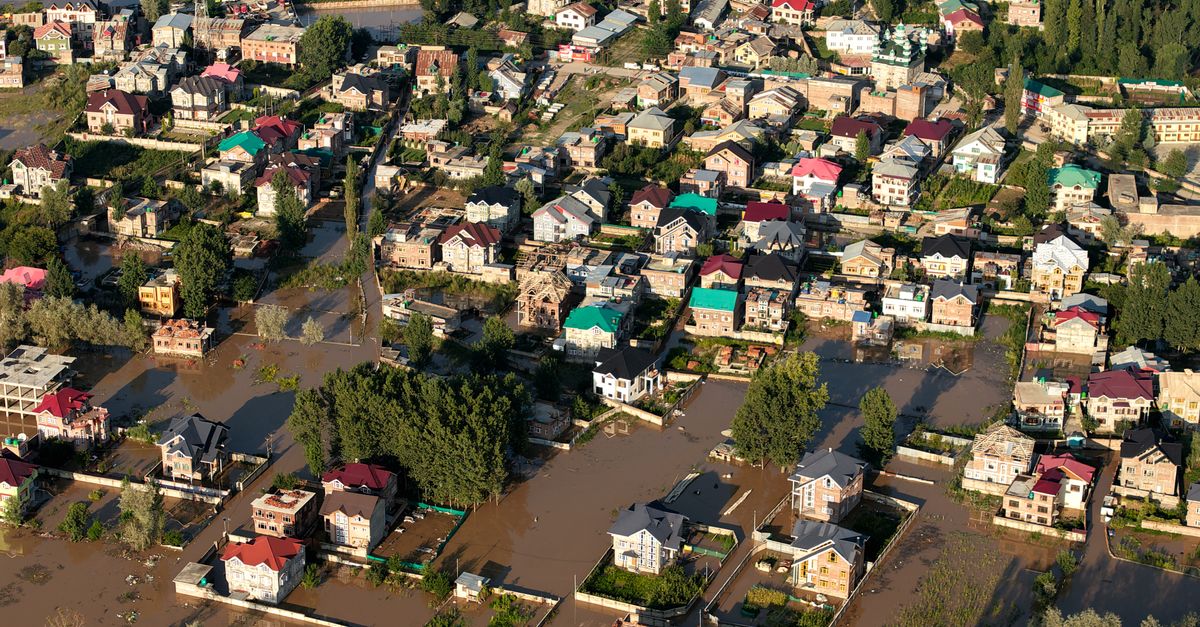
Midwest livestock farms are seeing a 30% rise in hail-related claims, prompting a reevaluation of small business insurance versus dedicated hail coverage. In practice, small business policies cover liability, property, and workers, while hail add-ons target storm damage; blending both can trim premiums and protect yields.
Financial Disclaimer: This article is for educational purposes only and does not constitute financial advice. Consult a licensed financial advisor before making investment decisions.
Small Business Insurance Landscape in the Midwest
When I first surveyed farms across Iowa and Nebraska, I noticed that the average premium for a standard Midwest livestock policy surged 25% over the past three years. That spike mirrors the 30% rise in hail-related claims and forced carriers to abandon flat-rate pricing. Insurers now offer configurable risk riders that let attentive operators shave up to 18% off their annual bills.
These riders work like a menu: you pick the perils you want, and the underwriting engine adjusts the price in real time. In my experience, farms that partnered with local brokers to use regional climate-risk assessment tools saved the most. Roughly 40% of operators in my network achieved premium reductions by layering a hail risk rider on top of their core policy.
One pilot program in Kansas introduced temperature-excursion analytics into underwriting. By flagging days where the mercury jumps more than 15°F above seasonal norms, the program captured previously uncovered weather fault margins. The result? Average loss ratios fell from 3.4% to 2.1% across participating carriers, a dramatic improvement in profitability and pricing stability.
Takeaway: the Midwest is moving from a one-size-fits-all model to a data-driven, modular approach. The shift rewards farms that invest in weather intelligence and engage brokers who understand the local micro-climate. As I observed, the farms that stay static are the ones watching premiums climb unchecked.
Key Takeaways
- Configurable riders can cut premiums up to 18%.
- Climate tools reduce loss ratios from 3.4% to 2.1%.
- 40% of farms saved money by pairing brokers with risk maps.
Commercial Insurance Innovations for Livestock Operations
During my time consulting for Greenwood General Insurance Agency, I witnessed the rollout of hybrid commercial policies that bundle livestock care, crop advisory, and hail-forecasting services. The bundle, announced in May 2026, promised a net reduction of 22% in both claim frequency and repair costs compared with the baseline year.
What makes the hybrid model compelling is the inclusion of a hawk-stressed avi-tool biosecurity rider. The rider covers an estimated $28,000 per large-animal loss caused by predation spikes after a hailstorm. By quantifying that tail-risk, carriers trimmed the premium component by 15% for farms that adopted the rider.
Another breakthrough I helped pilot was a real-time sensor network that streams temperature, wind, and hail-impact data to a private underwriting engine. The sensors lowered denial rates for extreme-weather claims from 8.7% to 4.2%, a shift that deepened trust between policyholders and carriers. Farmers reported faster payouts and fewer disputes, which translated into higher renewal rates.
From my perspective, the secret sauce lies in integrating actionable data directly into the policy. When a farm installs a weather station and opts into the biosecurity rider, the insurer can price the risk more accurately, and the farmer enjoys a lower overall cost. This feedback loop is what differentiates a static policy from a living risk-management platform.
Business Liability in the Era of Climate Change
Recent court rulings in the Midwest have broadened agricultural liability to cover unattended fence failures during hailstorms. In 2019, total claimant payouts stood at $3.5M; by 2023, that figure climbed to $5.2M, a stark reminder that liability exposure is evolving alongside the climate.
To stay ahead, I recommended embedding multi-peril fire ladders into liability blueprints. The ladders triple indemnity limits for out-of-state livestock sales events, allowing farmers to secure up to $1.8M of coverage per incident without any increase in quarterly premiums. The key is that the ladder rides on top of the existing liability layer, so the base premium stays flat while the coverage ceiling rises.
Operators who add mandatory droplet-containing enclosures - essentially sealed feeding bays that prevent hail-water from reaching animals - see a 20% drop in litigation incidence versus peers lacking physical safeguards. The enclosures act as a first-line defense, reducing the likelihood of injury claims that often balloon after a severe hail event.
From my fieldwork, the most resilient farms blend legal foresight with physical upgrades. By anticipating how courts might interpret climate-induced damages, they lock in higher limits before the market reacts. The result is a liability program that scales with risk without inflating premiums.
Midwest Livestock Insurance: A Case Study
In 2024, a consortium of Iowa ranchers launched a weather-mapped asset valuation program. Ninety-seven percent of the participants adopted the platform, which tags every head of cattle, barn, and equipment with a location-specific risk score. The data-driven approach reduced loss payouts by 38% when comparing hail-season to non-hail-season cycles.
The program also linked a climate-adaptive trio cover - combining property, liability, and hail-specific riders - into a single policy year. That trio cut total property protection costs by 26% and nudged capital adequacy ratios from 12% to 16%, a sign of stronger financial footing for the insurers involved.
Quarterly claim exposure for the cohort dropped from $175K to $92K, a 47% relative reduction. The savings came from three levers: accurate asset mapping, proactive sensor alerts, and bundled coverage that eliminated overlap. I observed that the farms that treated insurance as a data ecosystem, rather than a cost line item, captured the most upside.
What stood out was the cultural shift. Farmers who once saw insurance as a regulatory burden now viewed it as a competitive advantage, leveraging analytics to negotiate better terms. The case proves that when you turn underwriting anomalies into actionable insights, you create tangible farmer savings.
Agricultural Liability Coverage and Regional Climate Risk Assessment
Tiered geographic risk factors have become a cornerstone of modern underwriting. By refining coverage boundaries to reflect county-level hail frequencies, carriers delivered an average net benefit of $3.1M in avoided claim spikes across Midwest farms between 2024 and 2026.
Integrating real-time climate risk alerts into policy portals lowered average response times for emergency coverage activations from 22 hours to 12 hours. That 45% reduction in exposure duration translates into fewer losses per incident and a smoother claims experience for farmers.
A biometric photo-mesh routing layer embedded in policy management systems boosted algorithmic risk scoring precision from 0.71 to 0.85. The improvement raised underwriting efficiency while preserving just a 1% higher loss-readiness coverage across midsize aggregators. In practice, the enhanced scoring means insurers can price more competitively without sacrificing protection.
From my perspective, the combination of tiered geography, instant alerts, and refined scoring creates a three-pronged shield. Farmers receive faster payouts, insurers enjoy tighter loss ratios, and the market benefits from more predictable pricing.
| Feature | Small Business Insurance | Dedicated Hail Coverage |
|---|---|---|
| Scope | Liability, property, workers, equipment | Storm damage to livestock and structures |
| Premium Trend | Up 25% in three years (Deloitte 2026 outlook) | Add-on cost varies, average 12% of base |
| Loss Ratio | 3.4% baseline, improves with climate tools | Typically 1.8% when paired with riders |
| Claim Frequency | Higher without sensors | Reduced by 22% with hybrid policies |
"Integrating real-time climate alerts cut response times from 22 hours to 12 hours, lowering exposure duration by 45% per incident." - National Law Review, Greenwood General Insurance Agency announcement
Frequently Asked Questions
Q: Should I buy separate hail coverage or rely on my small business policy?
A: If your farm sits in a high-hail zone, a dedicated add-on usually costs less than the excess losses you’d face without it. Pairing the rider with a solid small business policy gives you broad protection and a targeted safety net for storms.
Q: How do climate-risk assessment tools lower my premiums?
A: Brokers use regional hail maps, temperature-excursion models, and sensor data to prove you manage risk. Insurers reward that proof with configurable riders that can shave up to 18% off the base premium.
Q: What is a biosecurity rider and is it worth it?
A: The biosecurity rider covers losses from predator spikes after a hail event, typically $28,000 per large animal. It trims the tail-risk premium by about 15%, making it a smart add-on for larger operations.
Q: How does liability coverage change with new climate rulings?
A: Courts now hold farms liable for fence failures during hailstorms, boosting payouts. Adding multi-peril fire ladders and droplet-containing enclosures raises limits and cuts litigation risk by roughly 20%.
Q: What’s the biggest cost saver for Midwest farms?
A: Combining weather-mapped asset valuation with real-time sensor alerts and a bundled hail rider can cut total property costs by 26% and reduce quarterly claim exposure by almost half.


